All articles
Written for stock investors: the whole of crypto explained from scratch. Grouped below into basics, compare, advanced, risk and strategy — not sure where to start? Begin with the first piece under "Basics."
Basics
From zero · 15 articles
The complete guide for stock investors moving into crypto: from broker to exchange
The master overview. It takes you through in order: why it's worth a look, where to open an account, how to make your first buy, where to keep your coins, which traps to avoid.

How a stock trader buys their first Bitcoin / USDT
Sign up, KYC, deposit, buy USDT then BTC — every step mapped to a brokerage move you already know.

What is USDT: think of it as crypto's "cash balance"
Why you can't buy Bitcoin with cash directly and always have to pass through USDT — explained once and for all.

Reading crypto charts: what's the same and different from a stock terminal
Candlesticks, moving averages, volume — all old friends, but red and green look flipped. Most of your chart-reading carries straight over.

BTC and ETH: are they crypto's "blue chips"?
Where the blue-chip analogy fits, where it doesn't carry over, and why beginners look at these two first.
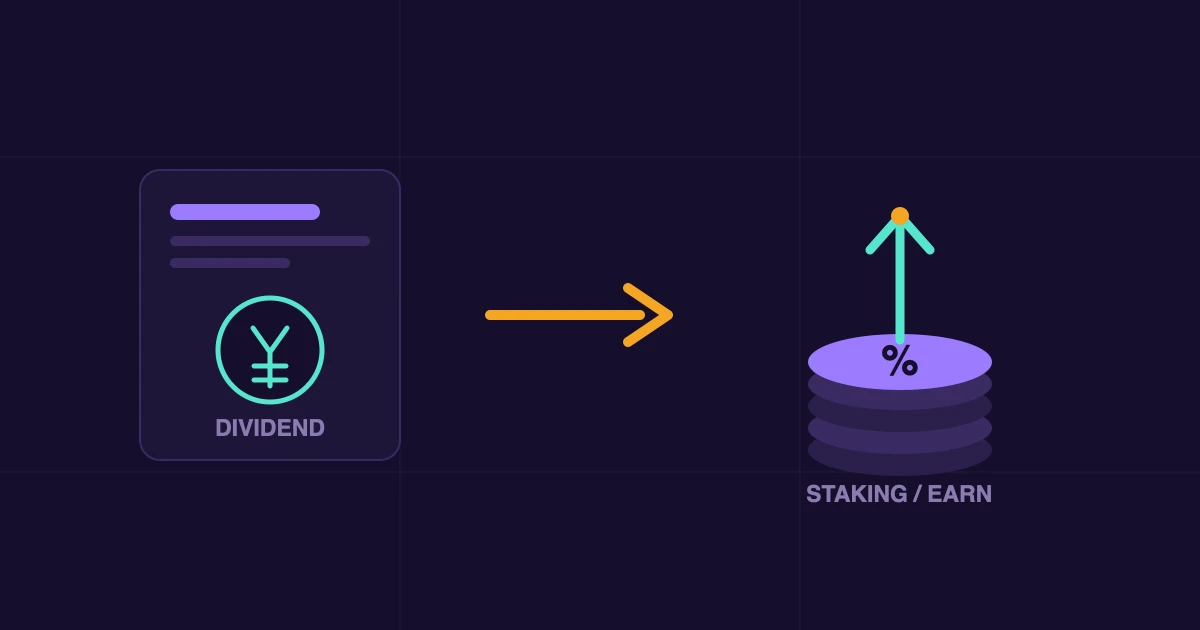
Staking rewards vs stock dividends: what actually changes
Crypto pays you for holding too — but in coins, at a floating rate, often with a lock-up. The four differences that catch stock investors out.

What a crypto wallet is: why not keep all your coins on the exchange
"Not your keys, not your coins" — what a wallet actually controls, and when to move your coins out.

How Cashing Out Crypto Works and Where It Goes Wrong
Turning coins back into money takes three steps, and the risk is concentrated in the one where you receive fiat. Covers the basic path, frozen bank cards and ways to lower the risk.

Crypto Trades 24/7: How to Adjust Your Routine and Screen Time
Arriving in a market that never closes — how it messes with your sleep and your nerves, and how not to let it lead you around.

How to Register on Binance: KYC and Account Setup, Step by Step
From sign-up and KYC to 2FA and your first deposit — every step mapped to opening a brokerage account.

What Is Bitcoin: Plain English for People Who Buy Stocks
Why does it have value, and how is it different from stocks and gold? Plain English for anyone with stock-market experience.

What Is Ethereum: ETH, Smart Contracts, and How It Differs from Bitcoin
What ETH is, how to grasp smart contracts, how it differs from Bitcoin, and where its value comes from.

Which Crypto to Buy First: A Stock Investor's Blue-Chip Approach
Why start with BTC and ETH and skip altcoins — using the blue-chip thinking you already have from stocks.

What Is Blockchain
Using one ledger everyone keeps a copy of, it explains in plain English how decentralization and immutability actually work.
Binance's 24-Hour Change and an A-Share's Daily Change Start From Different Prices
Binance's default % change compares with the price 24 hours ago on a rolling window; A-shares use the previous close all day. UTC+8 starts it at the 00:00 open.
Compare
Stocks vs crypto · 3 articles
12 key differences between stocks and crypto (from a stock investor's view)
A side-by-side table laying out trading hours, price limits, regulation, volatility, dividends vs staking and more, line by line.

Brokerage account vs exchange account: 6 things that differ
Onboarding, custody, deposits and withdrawals, trading hours, matching, risk isolation — don't force your stock habits on.

How to Choose a Crypto Exchange: A Stock Investor's Due-Diligence Checklist
Skip the rankings. Use a broker's due-diligence approach: safety, compliance, liquidity, fees, deposits and withdrawals.
Advanced
A level deeper · 9 articles
What crypto "fundamentals" actually mean (vs a company's financials)
In a world with no earnings reports, fundamentals mean supply, unlocks, on-chain data and narrative — and which stock instincts to drop.

Do candlesticks and technical analysis still work in crypto?
Whether the craft you've watched for years still holds — what keeps working, and what fails in a 24/7 market.

Spot vs futures: understood through margin trading
Futures carry leverage, can short, and can be liquidated — at heart a lot like margin, but the harsher parts come first.

What the Bitcoin halving is (note: a halving is not a price crash)
The halving means new-coin output is cut in half — Bitcoin's core issuance mechanism. Don't misread it as the price falling by half.

Market cap and supply: how stock investors should read these crypto metrics
"It's only a few cents, surely a bargain?" The question isn't the unit price, it's market cap — plus the circulating-supply and FDV traps.
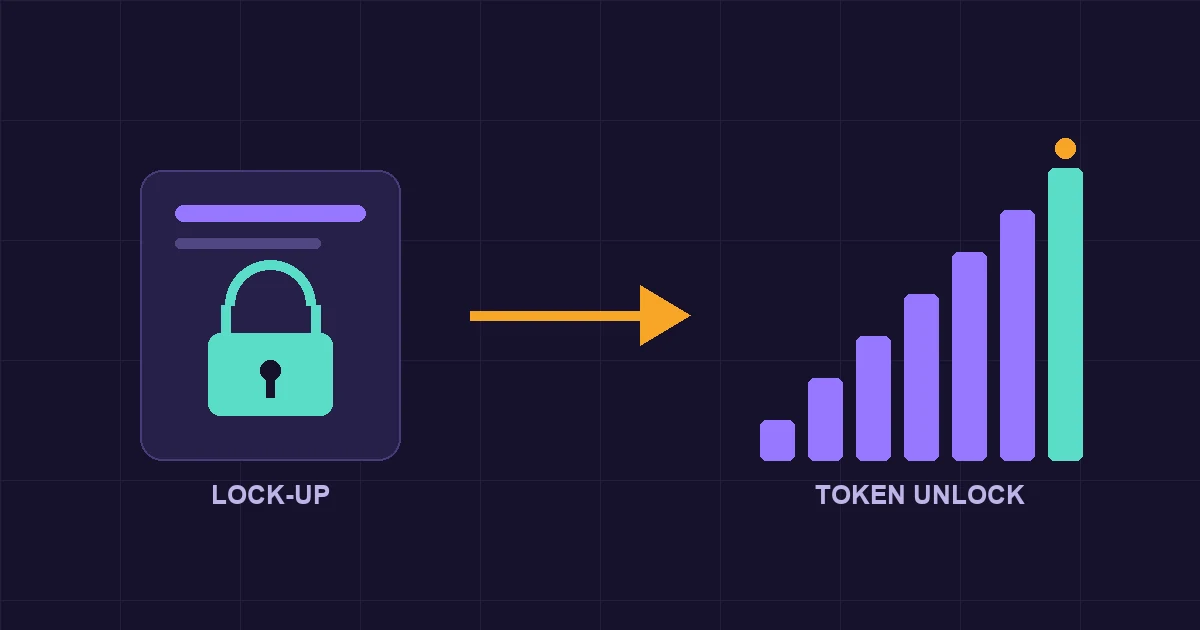
What Is a Token Unlock? Read It Against a US IPO Lockup
Who a lockup locks and for how long, which crypto holdings match that, and one official unlock table worked through to see how big a first unlock was against circulating supply.

What the Binance Monitoring Tag Means, Compared With an A-Share ST
Binance's Monitoring Tag marks listed tokens at risk of delisting; trading one takes a quiz every 90 days. PIVX went from tag to withdrawal cutoff in 121 days.

Binance Delisting vs A-Share Delisting Period
Longyu Data got a 15-trading-day delisting period, then 45 trading days to transfer. Once EPIC and QUICK stop trading on Binance, only withdrawals remain.

Crypto Taxes: Which Actions May Be Taxable, Which Records to Keep
Tax rules differ from place to place. Covers which actions may be taxable, and which records to keep from your first trade onward.
Risk
See the traps first · 5 articles
Common crypto scams: the traps experienced investors fall for
Scams target the very habits and blind spots of seasoned investors — romance-investment scams, fake exchanges, airdrop phishing and support impersonation, taken apart one by one.

Crypto has no price limits: both risk and opportunity are amplified
No brakes on the way down — what that actually changes, and why to grasp it before your first order.

How Far Can the Price Fall Before a 10x Long Is Liquidated? The Liquidation Price Formula
A 10x long, with the maintenance margin rate taken as 0.5%, is liquidated when the price is about 9.5% below entry. The article derives that from the simplified formula and checks it against a 2x to 100x table and an example at 60,000 USDT.

What to Check About Crypto Rules Before You Buy
Which jurisdiction you're in, whether you only hold coins or run a business with them, how you keep records: things to check for yourself before you start.

8 Crypto Beginner Mistakes Stock Investors Make
Going all in, futures, chasing pumps, no stop-loss, all coins on the exchange, copy-trading, altcoin dreams, ignoring fees — each tied to a stock lesson.